



SPROUTING YOUR OWN SEEDS – WHY & HOW
Heading into the fall and winter seasons it is good to know that, even in the north, we can still grow some of our own food, packed with vitality and nutrients, helping to fend off those pesky colds and flus that are certain to make their come back.
PART 1 – WHY TO SPROUT YOUR OWN SEEDS
Today’s post covers WHY to sprout. In the following posts I will provide specific instructions plus additional information.
Why Sprout?
Sprouting is a great way of adding high quality nutrition to your daily life. Sprouts are the only food source that is still alive when we eat it. The process is easy and can be done by anyone with supplies found in every home kitchen. No extra space is required, even the smallest kitchen will do. Sprouting is very economical and therefore is suitable for any budget.
Any seeds and nuts can be used for sprouting; however, it is best to use certified organic seeds and only those that are intended as food crop rather than farm planting seeds. This minimizes the risk of contamination.
To my knowledge, organic sprouting seeds have not been implicated in any outbreak of food poisoning.
Sprouts contain the highest concentration of phytonutrients per calorie of any food. Phytonutrients provide a great spectrum of health benefits.
Benefits of Eating Sprouts
➣ Great source of nutrition; sprouts are rich in vitamins, minerals, proteins and enzymes
➣ Support and nourishment for the entire body including immune system and cardio vascular health
➣ Very easily digested and assimilated
➣ Improvement of the efficiency of the digestive system
➣ Protection against free radical damage
➣ Very inexpensive
➣ Available year-round even when other vegetables and fruits are not available
➣ Easy to grow at home
➣ Great variety of usages
➣ Plus lots more
Commonly Used Seeds for Sprouting
Alfalfa – Beans (various) – Broccoli – Chia – Chickpeas – Fenugreek – Lentils – Mustard – Peas – Pumpkin – Radish – Red Clover – Sunflower
NOTE: Most seeds and nuts can be used for sprouting but some may require more equipment and experience than the ones mentioned above
Avoid sprouting seeds from plants that have poisonous parts.
You can save some of your garden seeds and use them for sprouting i.e. radish, caragana seeds
STAY TUNED for next week’s post on HOW to sprout.

HEMP HEARTS – BEST SOURCE OF PROTEIN
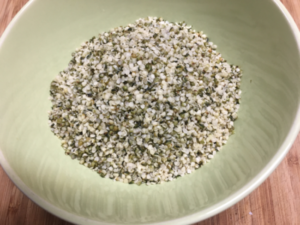 Hemp Hearts (shelled hemp seeds) are the best source of protein, essential fats — rich in Omega — vitamins and enzymes on the Earth. Rocky Mountain Hemp Hearts contain twice as much protein compared to other kinds.
Rocky Mountain Hemp Hearts are grown without herbicides or pesticides. The products are made fresh daily, priced to sell quickly and shipped in small lots. They contain a natural antioxidant (Vitamin E) that keeps them fresh for many months at room temperature. Nothing has been added to the Hemp Hearts from Rocky Mountain. Nothing has been removed but the shell. The list of health benefits is almost endless – both for healthy individuals and those dealing with (chronic) health issues.
Hemp Hearts compared to other foods:
– contain more amino acids than milk, eggs or meat
– complete source of protein
– contain about 47% oil, 86% of which is omega 3, 6 and 9
– contain all essential fatty acids required for health
– provide plenty of energy without the use of sugar, caffeine etc.
– suitable for anyone unable to digest gluten, dairy, nuts, meat and sugar
– perfect for those avoiding carbohydrates
– supports and encourages proper bowel function
Hemp Hearts can be enjoyed in cereal, salads, baked goods, added to sauces, mixed with yogurt and fruit…
I strongly recommend to make Hemp Hearts part of your daily health giving regime!
Green Blessings,
Gudrun

The Magic of Mother Earth
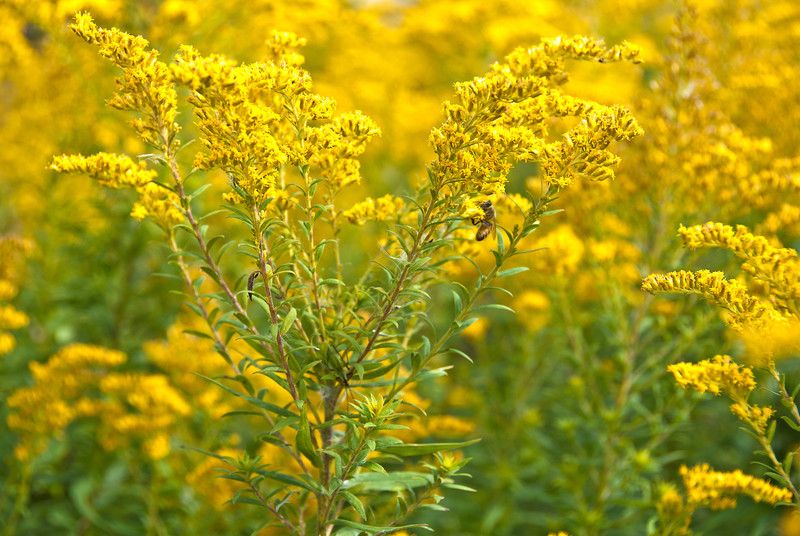 The abundance and beauty of the Earth at this time of the year in the Peace Country is amazing. I encourage you to bring some of the magic of Mother Earth into your home by adding the wild greens to your food, preparing a cup of tea with fresh plants or harvesting and drying herbs for later use. Goldenrod is one of those amazing herbs you can see everywhere right now.
Goldenrod is a fairly tall plant with beautiful, vibrant golden-yellow flowers. You will find it in dry woodlands, forest clearings and roadsides.
The Latin name Solidago originates from “solidus” & “ago,” Solidus, meaning “healthy and strong,” and ago meaning “to make whole.” Both of these terms refer to the plant’s ability to heal wounds.
Some common names for Goldenrod from various cultures also give an indication for its medicinal use as a wound healing herb, for example in Germany the herb is often called “Fastening Herb”. In fact in ancient German history Goldenrod was gathered as a wound herb before engaging in battle, just in case it was needed.
However, the focus today for its use has shifted from a wound healing aid, to a very reliable herb to support the kidneys. It promotes the elimination of urine and is applied for acute as well as chronic conditions of the kidneys and bladder including inflammation. In addition, it has been found to support the body during times of upper respiratory infections, especially when dealing with a chronic situation.
For medicinal purposes the leaves and flowers (early flowering stage) are being harvested and may be used fresh or dried. The fresh leaves and flowers can be used for wound healing or made into a tea, which can also be used as a wound wash. The dried herb may be used in the form of a tea as well but also as a tincture. A tincture is an alcoholic extract of a plant and is more concentrated than an herbal tea. The “crafty” person might want to try to use the flowers as a natural dye.
This summer Goldenrod has been brightening up the landscape in so many places and the quality of it has been superb. Many times you will find it being “infested” with many small bugs, but this year the only insects I have watched enjoying the bright, yellow flowers are butterflies and bees!
If you are not sure how to prepare the herbs, remember that the DVD Herbal Pharmacy for Everyone provides clear and easy to follow instructions, teaching a great variety of herbal preparations. Check my website www.herbalinstructions.com for more information.
Disclaimer
This information is not intended for the use of diagnosing any disease, condition or prescribing any treatment whatsoever. The use of any of the herbs and preparations is the sole responsibility of each individual and does not replace the services and advice of a medical practitioner and qualified healthcare provider. Consult a qualified healthcare professional before making medical decisions or if you have questions about your individual medical situation. No responsibility is assumed should the information be used in place of a licensed medical practitioner’s services.
WEEDS FOR WELLNESS – A GUIDE TO YOUR BACKYARD PHARMACY
Insect Bites
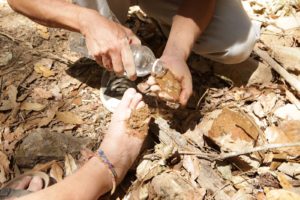 Biting insects including wasps and hornets are plentiful this year and can take some of the joy out of summer for some of us. Spit poultices from Plantain or Fireweed leaves can be a life saving tool. When neither one is available you could simply use mud (add water to dirt to make a paste). The mud applied to a nasty insect bite right after I got stung while filming the DVD, brought instant relief (see picture). It also helped to avert an allergic reaction. See more on the DVD at www.herbalinstructions.com.
Carrying a small spray bottle with (apple cider) vinegar while out and about may also prove to be helpful. When applied directly to a mosquito bite it will prevent the swelling and itchiness. I have no personal experience how it might work for other insect bites, but it would definitely be worth a try.
FOOD FOR THOUGHT: Some people respond with an over-sensitivity to even minor mosquito bites. If this is your situation, I suggest you look at your diet and eliminate all foods you suspect you are allergic/sensitive to. In my practice I have seen people who, almost miraculously, have stopped reacting to mosquito bites after changing their diet, for example taking out all gluten. Prior to this they were not able to leave the house without certain medications because even a simple mosquito bite triggered an enormous reaction such as huge swelling that would last for days. This makes total sense to me.
Happy herballing and green blessings,
Gudrun
WEEDS FOR WELLNESS – A GUIDE TO YOUR BACKYARD PHARMACY FIREWEED
Epilobium/Chamerion Angustifolium
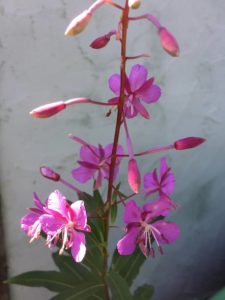 The pale purple, pinkish flowers of Fireweed are lavishly decorating our landscape right now. You can watch bees swarming around the plants, they love the flowers. Fireweed is apparently the only plant in the world that has purple pollen. It is the first plant to grow after a fire, preparing the soil for other plants and trees to follow. Fireweed provides both food and medicine for us. Hippocrates said: “Let food be thy medicine and medicine be thy food.” How true this is.
The FLOWERS, UNOPENED BUDS and YOUNG LEAVES of Fireweed make a great addition to any salad, and of course, I add any of them to my Jungle Juice. The young shoots can be prepared like asparagus. A tea made from the LEAVES may simply be enjoyed as a beverage or used for medicinal purposes in cases of enlarged prostate (benign prostatic hyperplasia – BPH). Note: Some sources suggest that Fireweed tea has a slight laxative effect whereas others say it is being used for certain forms of diarrhea. Therefore, be your own judge and enjoy the tea in moderation until you know how it affects you – this, of course, holds true for anything you ingest or put on your skin.
 As mentioned in an earlier post, a SPIT POULTICE made from the leaves, just like Plantain, will provide great relief from insect bites – numbing the pain as well as reducing swelling and allergic reactions. I have heard from numerous people this year who have made use of this knowledge and were able to avoid hospital trips while watching the magic of the plant world unfold in front of their eyes. The gifts of nature are all around us. The poultice can also be used to minimize bruising and help draw slivers.
The FLOWERS, some sources include the leaves as well, provide effective relief for hemorrhoids. For this purpose, make an infused oil which can be used as is or made into suppositories. It is advisable to look at diet, lifestyle and liver function when dealing with hemorrhoids.
A decoction made from the WHOLE HERB, including the ROOT, has traditionally been used as an anti-spasmodic in the treatment of (whooping) cough and asthma. The preparation was allowed to cool before taken internally.
Fireweed can be considered a survival food with anti-inflammatory properties. It is relatively high in nutrients including vitamin C, beta-carotenes, calcium and magnesium. Always remember though, that the nutrient content (and flavour) of a plant varies greatly with the soil it is grown in.
RECIPE SUGGESTIONS
1. Add leaves, flowers and/or buds in any salad
2. Slightly steam young shoots until just tender. Melt butter, add lime juice, pour over Fireweed. Sprinkle with seeds/and or nuts on top (almonds, hemp hearts…)
Adjust proportions to your own liking. Remember, I consider myself a “free-flowing cook”. No recipe will ever turn out the same.
RESOURCE – QUESTION: Not sure how to prepare infusions, decoctions, infused oils etc? You find all these and many more preparations in my instructional DVD (over three hours of hands-on instructions): Herbal Pharmacy for Everyone – A Practical Guide to Creating Your Own Herbal Preparations. www.herbalinstructions.com. Subtitles in English, German, French and Spanish included as well as an appendix with all the recipes – just like a book.
“NATURE’S MEDICINES”
The perks of summer: bountiful harvest of nature’s medicines! I already made my first batch of the ointment, my clients call the “miracle magic cream”.
Remember that spending time in nature has many health benefits, many of which are being proven scientifically now. More on this one another day.
REMEMBER the post on PLANTAIN and its use as a spit poultice for insect bites. Sometimes Plantain is not around but you can use another plant that is abundant at this time of the year – the leaves of FIREWEED can also be chewed and applied to insect bites including wasp and hornet stings.
Green blessings,
Gudrun
WEEDS FOR WELLNESS – A GUIDE TO YOUR BACKYARD PHARMACY
PLANTAIN – PLANTAGO MAJOR
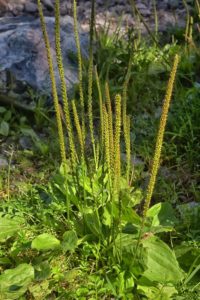 Plantain is one of the most versatile herbal medicines. We can use the leaves, seeds and roots but I will focus on the use of the leaves in the post. Most of you will have come across it. Most commonly around here we find broad-leaved Plantain (Plantago major). The plant grows along waysides, in gardens, lawns, pastures, meadows and cultivated fields. The leaves are very broad ovate and surround the stem in a basal rosette.
Plantain, just like so many other so-called weeds, is rich with nutrients including vitamins A, C, K, zinc, iron, calcium, magnesium, potassium, phosphorus and silicic acid. Remember that the nutritional value of any (edible) plant depends greatly on the soil it is growing in. Silica promotes tissue repair, in this case specifically in the lungs. Zinc enhances immune system function. Plantain also contains mucilage. Mucilage has a soothing effect on any tissue.
Internally Plantain is primarily used for any respiratory tract challenges, it restores the lungs and helps to expel mucous. It is helpful in conditions such as coughs including nervous cough, bronchitis, lung infections, allergic asthma and any other congestion incl. sinus and ear infections. I always have a jar of dried leaves on hand in the winter for my grand children. As a tea it can also be useful in cases of urinary tract infections or simple irritation.
Internally and externally it is a great wound healer for sores, cuts, scratches, dog bites, ulcers and burns. Applied as a poultice it provides instant relief from insect bites. Chew on a few leaves to get the juice from the plant flowing and apply directly to the irritated area(s). It is amazing how good this feels.
Plantain has many more usages but these are the most common ones.
As food you can add some leaves to the Jungle Juice or salad, use as spinach (cook only for a few minutes) or as a potherb. The younger leaves are preferable to older ones. And of course, you can make an herbal tea from the leaves as well.
I highly recommend that you get out there, harvest this miracle herb and add it to some of your dishes. But not only this, make sure you dry some for use in fall and winter in case a nasty cough gets hold of you.
Happy herballing and green blessings,
Gudrun
WEEDS FOR WELLNESS – A GUIDE TO YOUR BACKYARD PHARMACY
CHICKWEED – Stellaris media
 Chickweed is one of my favorite herbs. You can use all aerial parts of the plant. My husband has gotten into trouble more than once when he got rid of it from garden beds. Chickens and small birds enjoy feeding on Chickweed as well – probably the reason for its name. Chickweed is very nourishing, it contains many minerals and vitamins such as vitamin C, copper, iron, phosphorus and potassium.
My preference is to use Chickweed raw in salads, added to smoothies and the Jungle Juice, and as a garnish on sandwiches and in wraps. The flavour is mild and as with many herbs the younger plants are preferable. Especially when using it raw for salads and toppings, the stems of more mature plants get stringy, so you may only want to us the (flowering) tops. Try mixing it into cream cheese or make a herbal butter by adding chives and chickweed and maybe a bit of flax oil.
You can also add Chickweed to soups and other cooked dishes. However, you don’t want to cook Chickweed for more than a few minutes; therefore I suggest you add it towards the end after any other vegetables and greens have their required tenderness.
Medicinally Chickweed is very soothing to the skin. I like to use it externally for skin conditions such as eczema and itchy skin. It also has a cooling effect. Apparently the herb is also used as a tea in natural weight loss programs; however, I do not have any personal experience with this application. Less well known is the fact that Chickweed helps to soothe stomach ulcers and other digestive ailments.
Have fun, be creative and I hope you will enjoy Chickweed as much as I do.
Green blessings,
Gudrun

Follow Us!